What Is a Travel eSIM and How Does It Work?
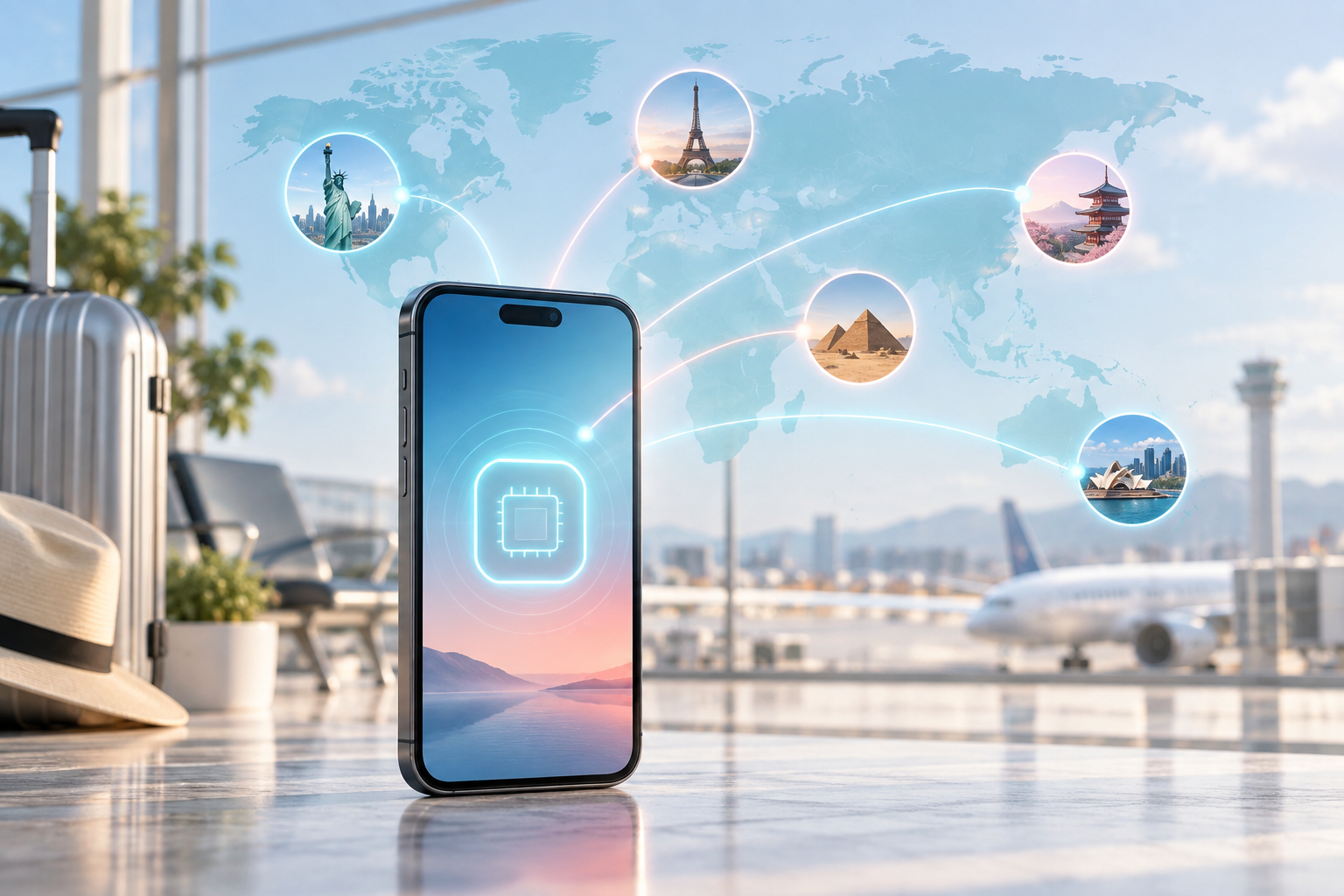
A travel eSIM is a digital mobile plan that you install on an eSIM-compatible device for use away from home. It can connect your phone to supported mobile networks at your destination without requiring you to replace your physical SIM card. Travel eSIMs vary by provider and plan: some are data-only, while others may include calls or texts. Coverage, data allowance, validity, activation rules and hotspot support can also differ. Before buying, confirm that your device supports eSIM, is not carrier-locked, and is compatible with the selected destination. BiteSIM's standard products are overseas data-only eSIMs unless a product page explicitly says otherwise.
What does “eSIM” mean?
An eSIM is a digital SIM profile that can be downloaded to compatible hardware. The GSMA describes eSIM as a globally backed specification for remotely provisioning mobile service, allowing a user to set up connectivity without inserting or replacing a physical SIM card.
The “e” does not mean the service is automatically global or unlimited. It describes how the SIM profile is provided. The plan attached to that profile still has its own destination coverage, data allowance, duration and network conditions.
How does a travel eSIM connect abroad?
The basic process has four parts:
- You choose a plan for one country or a group of countries.
- The provider sends installation details, commonly as a QR code or manual activation information.
- You add the eSIM profile to a compatible, unlocked phone.
- At the destination, you turn on the eSIM and select it for mobile data according to the plan instructions.
The local network shown on your phone may belong to a partner operator. That is why signal strength, available network technology and speed can vary by place, device and network conditions.
What is usually included in a travel eSIM?
| Plan feature | What to check |
|---|---|
| Destination | One country, a region or a global group |
| Data | Fixed allowance, daily allowance or another stated policy |
| Validity | Number of days and the event that starts the countdown |
| Calls and SMS | Often not included in data-only plans |
| Mobile number | Not normally included with BiteSIM's standard data-only products |
| Hotspot or tethering | Confirm on the individual product page |
| Network | Local partner network and available technology may vary |
Do not assume that every eSIM includes the same services. The individual product page should be the final source for the plan you buy.
Is a travel eSIM the same as international roaming?
No. International roaming normally means using your home mobile plan on a foreign partner network. A travel eSIM is a separate plan that you add to your device. Apple notes that a travel eSIM can be used by itself or as a secondary line while travelling. If both lines remain active, the travel eSIM can be selected for data, but the home line may still create roaming charges depending on its settings and carrier terms.
What should you check before buying?
- Confirm that the exact device model supports eSIM.
- Check that the phone is carrier-unlocked or has no SIM restrictions.
- Match the plan coverage to every country on your itinerary.
- Read when validity begins; installation and activation are not always the same event.
- Check whether the plan is data-only.
- Review data allowance, hotspot policy and any speed-management terms.
- Save the installation instructions somewhere you can access offline.
Who is a travel eSIM useful for?
A travel eSIM can suit travellers who want mobile data without swapping a physical SIM, waiting at an airport kiosk or relying entirely on public Wi-Fi. It can be particularly convenient for short trips, multi-country itineraries and travellers who want to keep their main SIM installed for their usual number.
It is not automatically the best option for every trip. A local carrier plan may be more suitable when you need a local phone number, local voice service, a long-term contract or a very specific domestic package.
Frequently asked questions
Does a travel eSIM give me a phone number?
Not always. Many travel eSIMs are data-only. BiteSIM's standard products do not include a Hong Kong local number, local voice or local SMS unless the product page expressly states otherwise.
Can I install an eSIM before I travel?
Often yes, but the correct timing depends on the plan. Some validity periods begin only after connection at the destination; others may use different activation rules. Always follow the product-specific instructions.
Can I keep my normal SIM in my phone?
Many compatible phones support dual-SIM use, but the exact combination of active SIMs depends on the device model and carrier. Select the travel eSIM for mobile data and review the roaming settings of your primary line.
Do I need Wi-Fi to install a travel eSIM?
Installation commonly requires an internet connection. Apple says an iPhone generally needs Wi-Fi or a hotspot for eSIM setup, with limited exceptions on some devices and regions. Install while you still have reliable internet access unless your plan says otherwise.
Choose a plan for your destination
Ready to compare options? Browse BiteSIM travel eSIM plans by destination. Check the individual product page for coverage, allowance, validity and activation details before purchase.